The early church growth we see in Jerusalem following Pentecost (Acts 2) is remarkable. It began with the 120 people in the Upper Room (Acts 1:15); added another 3,000 at Pentecost (2:41); in a short time grew to 5,000 families (4:4); and continued to grow as summed up in Acts 5:14: “And all the more believers in the Lord, multitudes of men and women, were constantly added to their number.” As a result of Spirit-empowered witnessing by all the disciples – for example, those scattered after Stephen’s murder (Acts 8:4) and the missionary journeys of Paul (Acts 13-20) – thousands more Jews were added. Ultimately, Samaritans and Gentiles, throughout the Romans Empire, became followers of Jesus before the end of the first century. Shortly after, Christianity would become the largest religion in the world. How could such astounding growth of the early church be managed?
Updated September 15, 2026, with Part 2 of this Happ‑O‑getics series.
The Local Church
Late in His public ministry, Jesus promised He was going to build His Church, built upon the foundation stone of testimony that He was “the Christ, the Son of the living God” (Matthew 16:16-18; 1 Corinthians 3:11). Jesus would be the head of this Church (Colossians 1:18), and He would empower local bodies of believers with the ministry of the Holy Spirit (Luke 24:49; Acts 2; John 16:7-11). As He said, even Satan would not be able to stop it (Matthew 16:18). Two thousand years of history has proven Him right!
In This Article
The Plan for Early Church Growth
This is Part 1 of a two-part Happ‑O‑getics series.
Jesus, Himself, articulated the plan:
Thus it is written, that the Christ should suffer and rise again from the dead the third day, and that repentance for forgiveness of sins should be proclaimed in His name to all the nations.
Luke 24:46-47
…Go therefore and make disciples…teaching them to observe all that I commanded you (Matthew 28:19-20)…You are witnesses of these things.
Luke 24:48
Simple plan: People are to be saved from their bondage to sin and death and then empowered with the indwelling of the Holy Spirit. For that to happen, two primary passions of Jesus had to be implemented by the first Christians for early church growth to occur: 1) tell everyone about Me everywhere (Act 1:8) and 2) feed My sheep (John 21:15-17).
Only Jesus’ ingenious model of establishing local churches could possibly fulfill that plan. How well did the early disciples do?
The Response of the Forbidden Church of the First Three Centuries
One wonders why we don’t find more visible evidence of early church growth in public church buildings from the early centuries. It seems obvious to me that the reason is simple: they were illegal. Yet the church continued to grow under persecution as believers quietly met in homes. Christianity was not an approved religion in the Roman Empire until the fourth century under Constantine. As a result, they had to tell others, gather for worship, and teach and learn God’s Word without being noticed – meeting in homes well into the third century.
The New Testament refers to this. When Paul wrote to Prisca and Aquila in Rome (16:3, 5) he referred to “the church in their home.” When the couple had to leave Rome and live in Corinth, Paul again wrote them and referred to “the church that is in their house” (1 Corinthians 16:19). When he wrote to Nympha in Colosse, he referred “to the church that is in her house” (Colossians 4:15). In fact, there must have been at least two house churches in Colosse because when Paul wrote to Philemon in the same city (Philemon v.2) he addressed Apphia and Archippus and “the church in your house.” Even their “pot-luck meals” were from “house to house” (Acts 2:42, 46).

True to Jesus’ plan, Christians in these early centuries started house churches everywhere they went. After leading many to faith in Jesus on his first missionary tour, the apostle Paul retraced his steps and “appointed elders for them in every church” in every city where they had believers (Acts 14:23). When he returned from his tour he reported to “the church” at Antioch of Syria (v. 27). When he went on his second missionary tour, he went back through these same cities and we read: “So the churches were being strengthened in the faith, and were increasing in number daily” (Acts 16:5). This was explosive early church growth, happening city by city despite opposition and persecution. The conclusion is obvious – they were telling everyone about Jesus, many believed, and these “sheep” were organized into local house churches for feeding on the Word of God. The New Testament mentions house churches in Ephesus, Smyrna, Pergamum, Thyatira, Caesarea, Sardis, Philadelphia, Laodicea, Rome, Colosse, and many more – in Judea, Samaria, Galilee, Syria, Cilicia, Asia, Bithynia, Galatia, Achaia, Macedonia, and Italy, among others.
That is only the tip of the iceberg. Archaeology of ancient cities is revealing even additional evidence.
- Hippos-Sussita (overlooking the Sea of Galilee): seven churches have been found in a twenty-one-acre area
- Gerasa (Jordan): seventeen churches identified for a population of about 10,000 people
- Umm el-Jimal (Jordan): fifteen churches found for a population of about 3,000
- Villages such as Darayya (near Damascus) housed as many as eleven monasteries for study and copying (some of these dating and extending into the fourth-sixth centuries)
- Megiddo (Israel): a church dated ca. 230 AD was discovered in an ancient Roman town, with evidence it was hidden and abandoned during the Diocletian persecution.
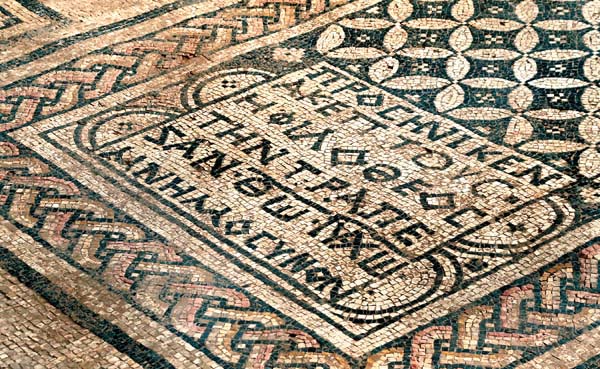
Most of these were house churches which were integrated into residential quarters. This number of house churches is typical of what archaeologists find in their excavations. It has been estimated that Christians established nearly 400,000 house churches in the first three centuries, many even after Constantine declared Christianity legal in the Roman Empire in about A.D. 313.
When Emperor Theodosius declared Christianity the official religion of the Byzantine Empire in A.D. 380, Christians made up more than 50% of the population of Syria (including parts of Turkey, Lebanon, and Jordan). By the seventh century it was 80%. As a result, in the Aleppo Plateau east of Antioch of Syria (where believers were first called “Christians” (Acts 11:26)), there is still evidence of hundreds of house churches and church buildings (these latter structures dating from the third–sixth centuries). Sadly, what was once considered the “cradle of Christianity” is no more. Recent persecution and Syrian conflicts have mostly eliminated any remaining Christian populations there.
The Church’s Response Through the Centuries
Has the Church continued to carry out Jesus’ plan since it’s earliest days? Is it still happening – “on steroids”? The answer is yes.
The first Christians faithfully carried out Jesus’ plan: they proclaimed the gospel, made disciples, gathered believers into local churches, and taught them God’s Word even when doing so brought opposition and persecution. That pattern of Spirit-empowered witness and church planting did continue after the first centuries of Christianity. Across centuries and throughout the world, Jesus has continued to build His Church using ordinary believers empowered by His Spirit.
Part 2 of a two-part Happ‑O‑getics series. New to this series? Start with Part 1: The Plan for Early Church Growth.
Jesus: “My Church and My Spirit”!
Surely the redeemed are God’s instruments for reaching a lost world. Early church growth in the New Testament makes that clear. History, however, quickly reveals human inadequacy. The cry of “our church” has often ushered in spiritually dry and evangelistically ineffective periods of Christian history. Explosive growth occurs when the reality is “His Church,” empowered by “His Spirit!” Indeed, that is what Jesus said would be true:
…I will build My church, and the forces of hell will not overpower it.
Matthew 16:18, The New Testament in the Language of Today, translation by William F. Beck
…when the Holy Spirit comes on you, you will receive power and will testify of Me in Jerusalem, in all Judea and Samaria, and to the farthest parts of the world.
Acts 1:8, Beck
It Began with a “BANG”
In Part 1 of this two-part series, I discussed what happened after Pentecost (Acts 2). In the first century, the disciples of Jesus testified about Him when they were empowered by the Holy Spirit. Within 300 years it is estimated there were 30 million Christians in 400,000 house churches on three continents – Asia, Europe, and Africa. This represents explosive growth! That was during a time when Christianity was illegal. Then for over 1,200 years “our church” became an institution and forgot the primary reason why it existed (Luke 24:46-48). By about AD 1600, Christians in the world had only increased to about 76 million – a dismal growth rate.
But then…GOD!
Beginning in the sixteenth century, a series of events occurred which can only be explained as God’s initiative. God prompted a search for biblical truth in the heart of Martin Luther which resulted in his nailing of ninety-five theses (propositions to be argued in an academic debate) on an institutional church door. This act became an “open door” for a Holy Spirit revival throughout Europe on the “backs” of reformers like John Calvin (France), Philipp Melancthon (Germany), Ulrich Zwingli (Switzerland), John Knox (Scotland), William Tyndale (England), and many more. While these reforms varied from country to country, two common features of it were an elevation of the teachings of the Bible (sola scriptura) and the need of a personal transforming faith (sola fide) – for all people. The Protestant Reformation was one result, considered by some to be one of the most important religious events in human history.
God was just getting started. In the seventeenth century, spiritual unrest and religious persecution in the Old World motivated some to seek religious freedom elsewhere. Devout Christians sought refuge in the New World, which was ultimately to become the United States of America. However, within one hundred years after the Reformation, the spiritual fervor in Europe, and even among those in the thirteen colonies was waning. The passion to save the world again grew dim. It was then that God put His additional plan to reach the lost into motion.
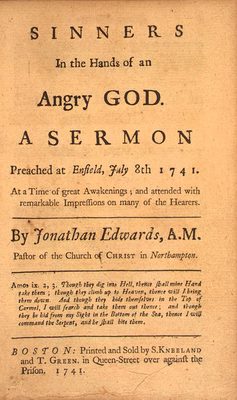
- First Great Awakening (1720-1750). Jonathon Edwards and George Whitefield (among others) were used to ignite a spiritual revival across parts of Europe and the thirteen colonies in America. A new zeal broke out as people recognized they were under the providence of God. By 1776 and the signing of the Declaration of Independence, this first awakening resulted in well over 90% of the U.S. population identifying with some major branch of Protestantism. The vast majority of Americans, even those with an irregular personal faith, affirmed the same moral truths of religious liberty and the equality of all people.
- Declaration of Independence (1776). Within two decades after that period, it is arguable that the First Great Awakening influenced or even prompted the Founding Fathers to write that “people were endowed by God with unalienable rights, and those rights were the foundation of liberty.” Scholars point out that between 1763 and 1805, the Bible accounted for a third of all citations in the writings of the founding generation. This is also why God is mentioned four times in the Declaration, maintaining that rights were “endowed by their Creator…,” and an appeal was made to the “Supreme Judge of the world.”
- Second Great Awakening (1795-1840). Within twenty years of the signing of the Declaration, the convicting power of the Holy Spirit again swept among Christians in the new nation, even as it spread westward. The preaching of personal salvation; the importance of translating and proclaiming of the Word of God; a care for the well-being of people everywhere; and the sending of missionaries to the lost world; these came about as a result. The passion of Jesus to take the Good News to the ends of the world had filled the hearts of American believers.
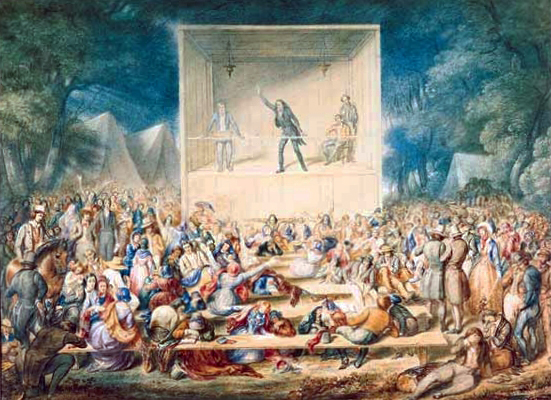
God had founded an exceptional nation of people, grounded in the Word of God, empowered by the Holy Spirit, and filled with the passion of Jesus to save the lost world.
God’s People in America: Catalyst for a Second Period of Explosive Christian and Church Growth
Having empowered a spiritual awakening across the United States, God then prospered His people for the next 250 years to minister and invest in the world by…
- Sending 450,000 Christian missionaries
- Building and staffing 1,200,000 K-12 Christian schools serving 245 million students
- Establishing 7,000 mission agencies to support those missionaries
- Building 75,000 Christian hospitals and clinics
- Translating the Bible into 7,278 languages and dialects
- Providing 40% of the world’s disaster relief
The resulting Christian expansion inspired the foundation and operation of what is likely the largest non-governmental service system in human history. The Christian Church and other parachurch ministries reach hundreds of millions of people annually through education, healthcare, development, and disaster relief.
The result of Jesus’ leadership is astonishing. At the signing of the Declaration, after about 1,800 years since Christianity began, there were still only about 200 million Christians in the world. This year there are 2.6 billion people in the world who identify as Christians!
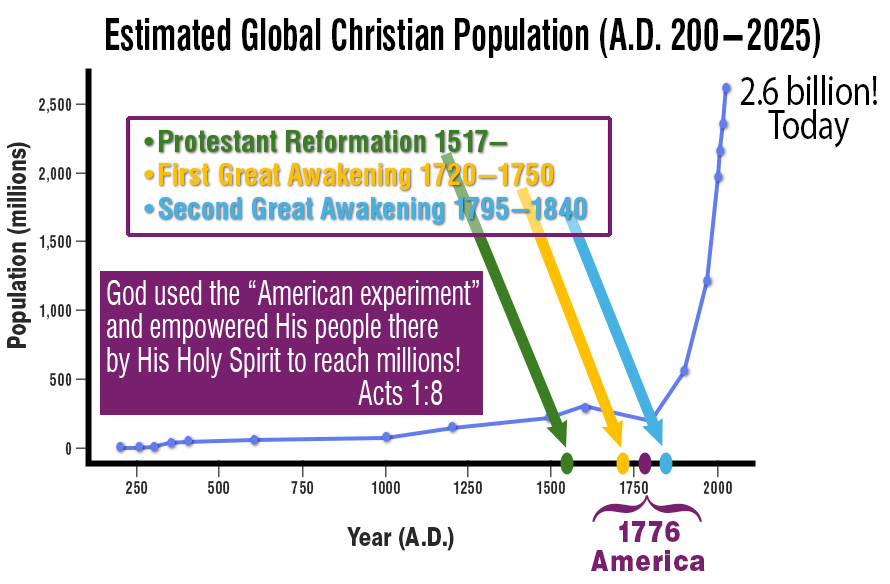
Furthermore, it is estimated that in the world today there are 4.4 million formally recognized Christian church congregations, and another 1.6 million informal house churches in countries like China, India, Iran, and parts of the Middle East and Africa.
America’s role in this explosive growth can only be explained by God’s choice and empowering of its people by the Holy Spirit. By this choice, God has given America a spiritual heritage – far more significant than its 250-year celebration. Billions of the rescued lost will be eternally grateful for this God-inspired heritage!
Today’s World-Wide Christian Church
In Part 1 of this series, it was established that Christianity began after the resurrection of Jesus in Israel and traveled west and north, so that in AD 1600, 95% of Christians were in what is referred to as “Global North” – primarily Europe. That was still mostly the case in the 1800s – 85% were in Global North. The more than two billion Christians added since AD 1900 have been mostly in “Global South.” As a result, today only 31% of the world’s Christians are in “Global North.” The “Global South” is home to 69% of Earth’s Christians, in Latin America, Africa, and Eastern Asia. There is a Christian majority in 120 countries, and 41% of these people are under nineteen years of age. God’s people in many of these countries are now emulating the heritage of His follows from America of previous generations by sending tens of thousands of missionaries to unreached parts of the world—including even to Europe and America. While American and European Christians still send about 145,000 missionaries around the world, there is clearly a spiritual and Christian decline in both, and a need for another awakening there.
Evidence for the Deity of Jesus Christ and the End of the World
The ability to accurately prophesy the future is an attribute of God alone –
…I declare new things; before they spring into being I announce them to you.
Isaiah 42:9
I began Part 2 of this series by quoting Jesus’ prophetic statement:
…when the Holy Spirit comes on you, you will receive power and will testify of Me in Jerusalem, in all Judea and Samaria, and to the farthest parts of the world.”
Acts 1:8, Beck
From the early church growth described in the New Testament to the recent explosive expansion of His Church to “the farthest parts of the world,” the fulfillment of that mission may indicate that the end of this age is drawing near. Jesus said:
…[T]his gospel of the kingdom will be preached in the whole world as a testimony to all nations, and then the end will come.
Matthew 24:14, NIV
I also quoted Jesus when He said, “…I will build My church, and the forces of hell will not overpower it.” The history of the Christian church is a testimony to the prophetic ability and accuracy of Jesus – further evidence of His Deity. As the angel Gabriel said to Mary at her miraculous conception, “…nothing will be impossible with God.” INDEED!
Sources:
Jacob Ashkenazi. “Why Did Early Christians Build So Many Churches?” Biblical Archaeology Review, 52.2 (2026), pp. 20, 22.
Sandra Scham. “The Dead Cities of Christian Syria.” Biblical Archaeology Review, 52:2 (2026), pp. 28-35.
The Bible (NASB)
World Christian Database; Center for the Study of Global Christianity; Pew Research Center; AI searches