The names which early Christian settlers in the New World chose for their communities is a testimony to the influence of the Bible on them. For example, there are twenty “Carmels,” twenty-nine “Bethanys,” and thirty-five “Bethels” among cities and towns in the United States. The top-named biblical city in the U.S. is “Bethlehem” with thirty-six. It is also true that one of the most loved Christmas carols in America is “O Little Town of Bethlehem.” Both the many city names and the carol are continuing reminders to everyone that it was there in Bethlehem of Judea that their Savior, the Son of God, was born. But what was Bethlehem in the time of Jesus really like?
Bethlehem History Up to the Time of Jesus
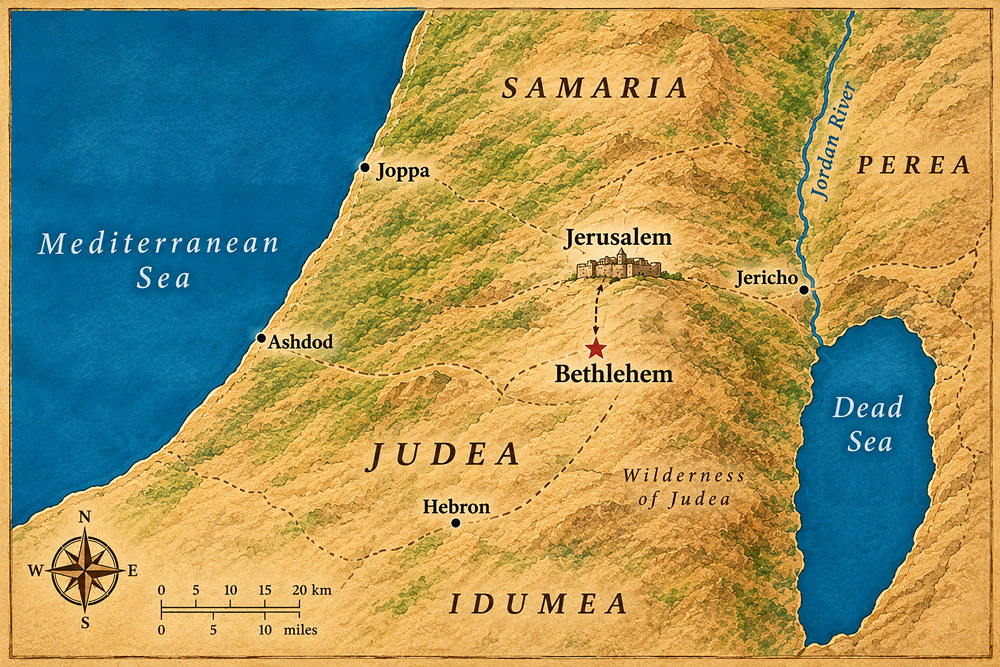
The name Bethlehem means “House of Bread,” which reflects the fertility of the surrounding region. It was strategically located about six miles south of Jerusalem on a ridge 2,500 feet above sea level and where developed, fertile farmland met the pristine pastoral lands leading toward the Judean wilderness. This explains why the Bible associates Bethlehem with both farmers of grain like Ruth and Boaz (Ruth 2) and shepherds (Luke 2).
Bethlehem itself is quite an ancient city. In the 19th century BC, Rachel (wife of the Patriarch Jacob) was buried near there (Genesis 35:19).
When archaeologists discovered the Amarna Letters (a collection of Egyptian diplomatic texts from the mid-14th century BC), they include mention of an established settlement, which some scholars say refers to Bethlehem.
The setting of the Old Testament book of Ruth is in Bethlehem in the early 13th century BC.
In the 11th century BC, Bethlehem was the home of Jesse, and where the prophet Samuel anointed Jesse’s son David, the shepherd boy, to be king of Israel (1 Samuel 16). David likely tended sheep in the same fields where the angels, 1,000 years later, announced the birth of Jesus to shepherds there.
In the late 8th century BC, the prophet Micah prophesied that Bethlehem would be the birthplace of a future ruler of Israel, a reference to Jesus (Micah 5:2).
In the 6th century BC, the prophet Jeremiah (41:17) referred to the Chimham Inn (“lodging place of Chimham”) in Bethlehem where the Israel military lodged on their way to Egypt.
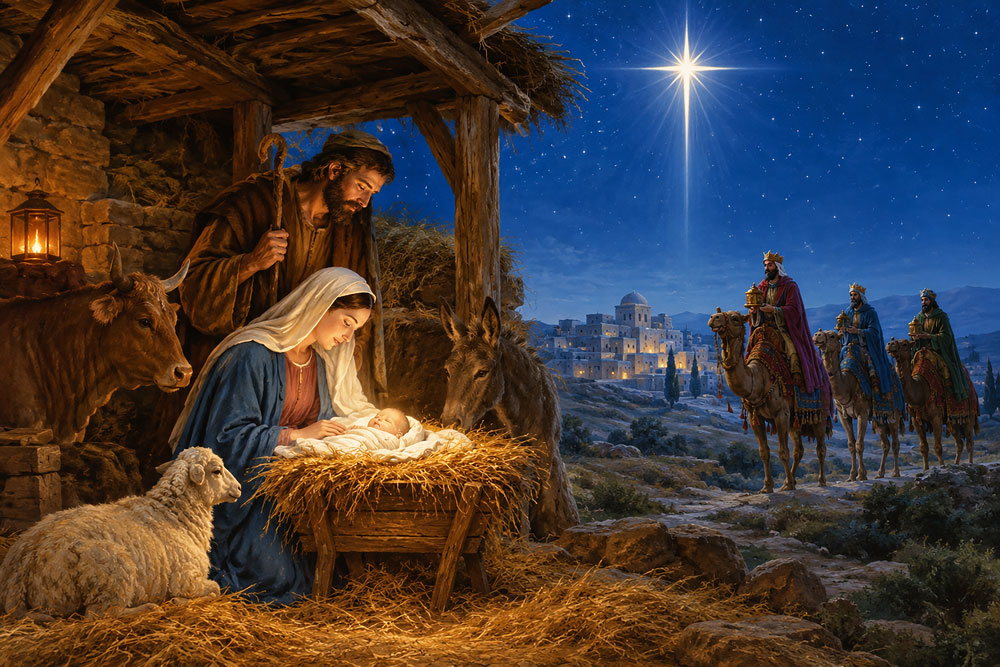
In late 5 BC, this same Bethlehem “hosted” the birth of “Emmanuel” – the special and unique Christmas event of “God with us” (Matthew 1:23). That is the Bethlehem which is the focus of this article.
Furthermore, Bethlehem still exists today after another 2,000 years – a total history of about 4,000 years.
So How Little Was Bethlehem in the Time of Jesus?
Since there have been few archaeological excavations in Bethlehem, no one can be certain of the size of Bethlehem in the time of Jesus. But the “elephant in the room” is the very visible, fabulous, and well-preserved water system built during the Hasmonean Dynasty (142-63 BC). Such an abundant source of fresh water suggests a city that was larger than a village, and one which was growing.
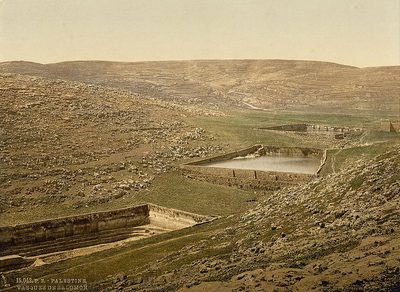
The system consists of three large, terraced reservoirs just southwest of Bethlehem. They look like giant swimming pools, each 400-600 feet long, with a combined capacity of 75 million gallons. An upper aqueduct comes off the upper reservoir and takes a direct 8.5-mile route to Hezekiah’s pool in Jerusalem (no pumps; water flowed down a 130-foot drop). It begins by skirting Bethlehem. This aqueduct was likely built by Herod the Great in the first century BC to support the water needs of a growing Jerusalem.
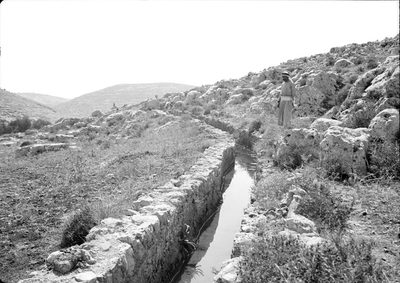
Relevant to Bethlehem, however, is a lower aqueduct from the lower reservoir with a channel dug 700 feet directly through the eastern part of the hill on which Bethlehem was built. This aqueduct was constructed at least a century earlier (2nd century BC) to supply abundant fresh water, an amazing luxury, to a growing Bethlehem during the Hasmonean period. It was later extended to also supply water to the Temple Mount in Jerusalem. This amazing aqueduct was maintained over the centuries, including the addition of ceramic pipes in the 16th century AD, and continued in use until the 1940s. A restored “fountain house” called Al-Ain still exists in Bethlehem today and identifies where freshwater formerly gathered in a pool for the residents – for about 2,000 years.
This elaborate water system, an incredible feat of engineering, begs the question: Why was it needed if Bethlehem was only a simple village with a few scattered houses? There are several arguments, though indirect, for Bethlehem in the time of Jesus being larger.
Bethlehem was included among the larger “fortified cities” of Rehoboam, Solomon’s son, already in the 10th century BC (2 Chronicles 11:5-12).
Construction after the time of Jesus (e.g., the 12th century AD Armenian monastery connected to the Church of the Nativity) occasionally re-used stone blocks from the Hasmonean period of the second century BC. This kind of block has been identified as used only for defensive structures such as a fortress to guard the lower aqueduct. This suggests that 2nd century BC Bethlehem may have still been a larger fortified city only a little more than 100 years before Jesus.
When the first century AD historian Josephus referred to Bethlehem, he used the Greek word for “city” (polis) rather than “village” (kome).
Luke, in his Gospel, likewise referred to Bethlehem by the Greek word for “city” (2:4, 11).
As a result, it is thought by some scholars today that Bethlehem in the time of Jesus may have been a bustling urban center with up to 3,000 population.
Why, then, the reputation of “little”?
The Christian writer Justin Martyr, in AD 156, referred to Bethlehem as a “diminutive pastoral hamlet in the Judean hill country.” He grew up just north of there, and visited the area during his lifetime, so it is difficult to suggest he was wrong. The explanation is likely that the Romans completely devastated Judea following the Bar-Kokhba Revolt (AD 132-136) and banished the Jews from the region. The Bethlehem population of Jesus’ time was no more, reducing the city to a simple and rural village. This would explain Martyr’s description a couple decades later.
That was twenty centuries ago. Bethlehem has since gone through the ups and downs of regime changes, wars, cultural transitions, and more, but the romantic “quaint village” reputation has stuck. Today the city proper has a population of nearly 30,000 and a metro region population of almost 100,000.
The Bethlehem of “Faith”
Micah, the Old Testament prophet, probably has contributed to the “small” reputation of Bethlehem when God prophesied through him (5:2),
“But as for you, Bethlehem Ephrathah, too little to be among the clans of Judah, from you One will go forth for Me to be ruler in Israel.”
Micah’s “claim to fame” for Bethlehem is not its size but rather the significance of its future “Visitor” – the baby Jesus, Son of God. The chorus that many love highlights this fame of Bethlehem, and how its truth can have an eternal impact on every person:
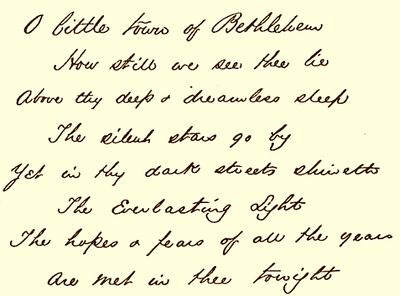
O little town of Bethlehem,
How still we see thee lie…
Yet in thy dark streets shineth
The everlasting Light;
The hopes and fears of all the years
Are met in thee tonight.For Christ is born of Mary…
Proclaim the holy birth!
And praises sing to God the King,
And Peace to men on earth…But in this world of sin,
Where meek souls will receive Him still,
The dear Christ enters in.Source: “Not So Little Town of Bethlehem,” Biblical Archaeology Review, Winter 2025 (Vol. 51:4), pp. 32-37. Additional AI searches. The Christmas carol “O Little Town of Bethlehem,” is based on an 1868 text written by clergyman and author Phillips Brooks, public domain.