This article explores how the Bible’s teaching on suicide and our culture’s new norms about death reveal whether death is our friend or our foe, and who has the right to decide when life should end—God or human convention. In what follows, we will look honestly at the Bible’s teaching about death and suffering compared and contrasted with topic of suicide in general and the alarming suicide rates emerging in the west.
Death: Friend or Foe?

This day I call the heavens and the earth as witnesses against you that I have set before you life and death, blessings and curses. Now choose life, so that you and your children may live (Deuteronomy 30:19, NIV).
I have observed a common theme in the emerging culture in America (and perhaps also in other parts of the world). No matter what God says in the Bible, the unbelieving world is prone to do the exact opposite. Perhaps we should by now expect this. After all, Paul points out that
…a natural person does not accept the things of the Spirit of God, for they are foolishness to him; and he cannot understand them… (1 Corinthians 2:14).
Nonetheless, it is amazing how stubbornly contrary the unredeemed mind is in insisting on pursuing its own “wisdom.” For example, the Bible says, “In the beginning God created the heavens and the earth” (Genesis 1:1). The world says, “No, it emerged by mindless evolution.” God says, “…male and female He created them” (Genesis 1:27); but the world says, “No, there are many other genders.” God says that marriage consists of a man and a woman (Genesis 2:24-25), but the world says, “No, it can be any combination of the many genders, or for that matter, species.” God says He is the author of life and aborting the unborn is sin (Psalm 139:13-16), but the world says, “No, it is a woman’s choice.”

There is another similarly stubborn trend occurring today in our culture regarding death. As we consider how our current generation speaks about choice, dignity, and autonomy, we need to look honestly at the stark contrast between what the Bible teaches about death and how suicide is being talked about today, and what our study of both reveal about life, death, and God’s authority.
Death: A Friend?
God’s word is clear that death is an enemy: “Therefore, just as through one man sin entered into the world, and death through sin, and so death spread to all men, because all sinned…” (Romans 5:12). Jesus came to earth to put an end to the power of death over humanity: “The last enemy that will be abolished is death” (1 Corinthians 15:26). Death is not normal, nor a friend.
Yet the world maintains, “No, death is desirable to save us from life!”
In 2016 Canada passed the MAID Act (Medical Assistance in Dying). It now facilitates 5% of all deaths in that country (one in every twenty). As of the mid-2020’s, over a dozen countries and several sub-national jurisdictions have provisions for assisted suicide, including Australia, Austria, Belgium, Canada, Colombia, Ecuador, Germany, Luxembourg, the Netherlands, New Zealand, Spain, Switzerland, and Portugal.
Medical aid in dying is also legal in the United States, in the following states: California, Colorado, Delaware, Hawaii, Maine, Montana, New Jersey, New Mexico, Oregon, Vermont, Washington, and Washington, D.C. Typically, a person requests a prescription for lethal medication, which they must then self-administer to end their life. The specific terms, conditions, and eligibility for assisted dying vary significantly within these jurisdictions.
Why is “death” Spoken of so Positively?
Physician-assisted death (PAD) was sold to Canadians and elsewhere on the principle of autonomy – you alone determine your destiny. This is reflected in the descriptions used by the movement and non-profit organizations which champion this: “Death with dignity”; “My death, My decision”; “Compassion and Choices”; and “Quality of life.” This is the opposite of what we find when we place the Bible and suicide next to each other in serious reflection.

In 2024, more than 30,000 people worldwide died through physician‑assisted suicide or euthanasia. Canada alone accounts for over half of those deaths. The justification for this keeps expanding. In some places, especially Canada, it has grown to include not just those with a terminal illness but also those who feel their life is not worth living, mental illness, infants with “severe malformations,” Alzheimer’s and dementia patients, etc. The result is that we are becoming a culture of do-it-yourself death. Death is becoming a “friend” to save us from life! That is very different from how the Bible and suicide portray the spiritual weight of taking a life, including one’s own.
Recorded testimonies help to reinforce this practice:
• A patient: A peaceful end: When discussing her decision to pursue MAID, Brittany Maynard, who had terminal brain cancer, said the option gave her a “sense of peace during a tumultuous time that otherwise would be dominated by fear, uncertainty, and pain.” Her hope was to die gently in her sleep rather than to suffer through the agony of her disease.
• A patient: Prioritizing quality of life: Some patients, like a woman with ALS, chose MAID to avoid prolonged suffering. She stated, “I’m not afraid of dying… I was afraid of living.” This sentiment is echoed by others who prefer to end their life on their own terms rather than enduring what they consider an intolerable decline.
• Family: Peaceful passing: Research on MAID in Canada and other regions shows that family members often describe the death as peaceful and express gratitude that their loved one’s suffering was ended. The daughter of a woman who chose MAID recounted, “My mom went the way she wanted to go… her death was bearable because of how peaceful and autonomous it was.”
• Physician: Compassionate act: One Illinois psychiatrist, who was initially opposed to MAID, changed her mind after witnessing her father’s peaceful death using the option. She concluded that “it was a compassionate act” and wished that everyone could have such a passing.
In all these stories, death is framed as a compassionate friend rescuing us from an unbearable life.
When Suffering Makes Death Look Like a Friend
The biblical account of Job says he lost all his many possessions, ten sons and daughters, and found himself smote with “sore boils from the sole of his foot to the top of his head” (Job 2:7, NASB). He even despaired of his life saying, “Why is light given to those in misery, and life to the bitter of soul, to those who long for death that does not come, who search for it more than for hidden treasure…” (Job 3:20-21, NIV). Furthermore, he lamented, “I loath my own life… Would that I had died and no eye had seen me! …carried from womb to tomb” (Job 10:1, 18-19).
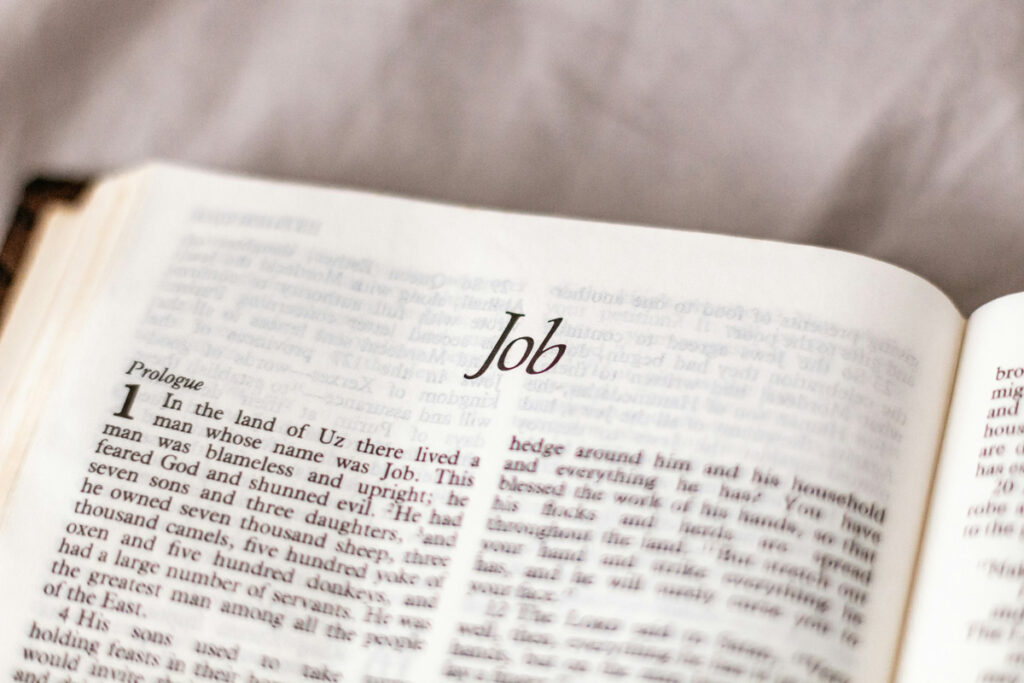
Job was a highly qualified candidate for PAD – i.e. suicide. PAD, claiming a motivation of compassion, allegedly would restore dignity and autonomy to hard-luck Job. Assisted suicide, advocates argue, would give him a win – a reward. Arguing against this today is seen as insensitive, even cruel.
However, one significant reality in Job’s life is missing from most contemporary discussions of PAD—the existence of God and His revealed truth. In response to his wife’s undoubtedly empathetic exasperation – “Do you still hold fast your integrity? Curse God and die!” (2:9) – Job asked, “Shall we indeed accept good from God and not accept adversity?” (v. 10). Although Job wished for death, he never took his own life or sought to end it himself; he persisted in wrestling with God. He rightly understood that life and death were to be the prerogative of God alone, the author of life. The story of Job already shows how differently the Bible and suicide approach suffering, despair, and the question of who controls life and death.
The “GOD” Factor
Compassion, however, is not the sole purview of PAD; it is also central in the Christian faith, and the way the Bible and suicide speak about life and death challenges our culture’s definition of compassion. One of the many attributes of God is identified in Psalm111:4, calling Him “gracious and compassionate.” When two blind men appealed to Jesus for mercy, He was “moved with compassion” and healed them (Matthew 20:34). The apostle Paul admonished Christians to “…put on a heart of compassion” (Colossians 3:12). Is suicide, then, even if elected, a compassionate choice?
William Ernest Henley, in 1875, wrote a poem entitled Invictus (Latin for “unconquered”), while recovering from the amputation of his leg due to tuberculosis. The lines from the final stanza, “I am the master of my fate, / I am the captain of my soul,” could be adopted as the slogan of PAD. As one misguided assisted suicide organization advertises, “We empower everyone to chart their end-of-life journey.” There is a deafening silence regarding God and His revealed truth in the popular global expansion of PAD.
In light of how our culture speaks about suicide and assisted death, we must return to what the Bible’s teaching on suicide and death shows us about God’s authority over life.
God’s Revealed Truth
Many people today quietly wonder, “What does the Bible say about suicide?” Before we can answer that, we must first see what Scripture reveals about God as the author and judge of life and death. Only by taking seriously the Bible and suicide as a moral issue can we think clearly about PAD and MAID.
1. God: Author and Judge of Life and Death
The apostle Paul instructed the Athenians about this reality:
The God who made the world and everything that is in it… He Himself gives to all people life and breath and all things… for in Him we live and move and exist… (Acts 17:24, 25, 28, NASB20).
The apostle Peter specifically said that Jesus “is the One who has been appointed by God as Judge of the living and the dead” (Acts 10:42). Finally, Jesus Himself said there is a reality beyond the grave where He alone has authority, “And do not fear those who kill the body but are unable to kill the soul; but rather fear Him who is able to destroy both soul and body in hell” (Matthew 10:28).
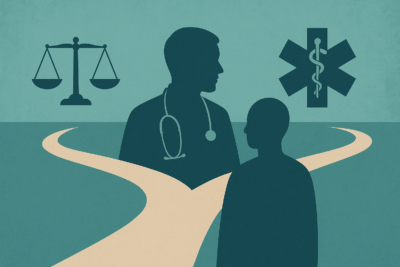
Thus, the first argument against PAD is that it wrongly usurps God’s authority over life and death. A killing takes place every time, even if consensual, which defies God’s exclusive jurisdiction.
2. God Seeks to Redeem and Not Destroy
God’s perspective is to view our life in its entirety. As Jesus said, “…the Son of Man has come to seek and to save that which was lost” (Luke 19:10). This temporal life and life eternal are a continuum. Physical death is the door between them. It is only in this life that repentance and forgiveness (redemption) can occur. Thus, Jesus invites us, “…come to Me, that you may have life” (John 5:40).
A common “fault” of humans is to ignore God and our eternal destiny so long as all is well. God loves everyone and desires that they be forgiven and become His redeemed children forever (2 Peter 3:9).
As Jesus said,
Truly, truly, I say to you, he who hears My word, and believes Him who sent Me, has eternal life, and does not come into judgment, but has passed out of death into life (John 5:24).
Billions of people are unaware, ignore, or reject this truth so long as they experience good health and prosperity.

C.S. Lewis shed some light on this conundrum when he wrote, “God whispers to us in our pleasures, speaks in our conscience, but shouts in our pains: it is His megaphone to rouse a deaf world” (The Problem of Pain, 1940). Pain sobers us to reflect on our limitations, our mortality. PAD prioritizes “comfort,” “convenience,” and a false sense of “autonomy” in this life at the exclusion of thoughtful reflection and preparation for the next.
Jesus said,
Do not marvel at this; for an hour is coming in which all who are in the tombs shall hear His voice, and shall come forth… to a resurrection of life” or “to a resurrection of judgment” (John 5:28-29).
A resurrection to eternal life in heaven is God’s will for each person (John 6:40), and He often uses pain as a “wake-up call” to His gracious offer.
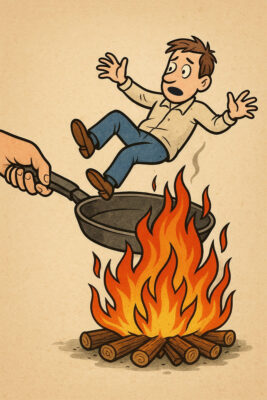
PAD, on the other hand, offers escape from pain by suicide as a presumption of “victory” by throwing in the towel and admitting defeat. However, by removing the possibility of redemption in that time, those who advocate PAD may be directing some to experience the fulfillment of the saying, “out of the frying pan and into the fire” – intentionally escaping one bad situation only to find themselves in an even worse situation. Rather than “victory,” it is the most horrid loss! It is a fulfillment of Jesus’ teaching, “The thief comes only to steal, and kill, and destroy; I came that they might have life, and might have it abundantly” (John 10:10).
A Final Word
PAD is increasingly proving to be subject to abuse. Alan Nichols was killed by euthanasia in Canada for a singular diagnosis: hearing loss. By 2027, Canada intends to extend PAD to individuals suffering from mental illness, depression, and anxiety. Legislation that began with the intention of meeting a narrowly defined need has progressed toward a culture of death.
Assisted suicide is also problematic when doctors or hospitals push euthanasia on patients as a cost‑saving measure. One man was informed that unless he submitted to PAD “it would cost the hospital a lot of money and he would be a burden to society.” In this sense, PAD becomes a form of eugenics, leading to a quiet genocide of the weak, deformed, mentally challenged, depressed, unwanted, and aged. It transforms suffering individuals—people to be loved and cared for—into problems to be solved.
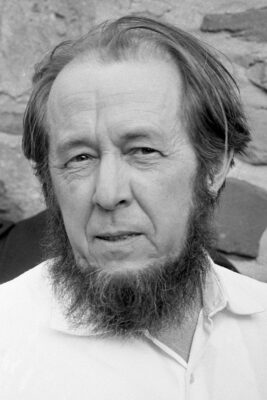
A statement by Aleksandr Solzhenitsyn, though in reference to a different issue, is apropos here, “Men have forgotten God; that’s why all this has happened.” If you are suffering or wrestling with suicidal thoughts, the call of Scripture is not to ‘choose death’ but to flee to Christ, seek help, and let others bear your burdens with you.
A statement by Aleksandr Solzhenitsyn, though in reference to a different issue, is apropos here: “Men have forgotten God; that’s why all this has happened.” The same is true wherever new norms about death, the Bible and suicide, and “compassionate” killing ignore God’s authority and God’s heart.
If you are suffering or wrestling with suicidal thoughts, the call of Scripture is not to “choose death,” but to flee to Christ, seek help, and let others bear your burdens with you. Do not struggle alone. Talk with a trusted pastor, mature Christian friend, counselor, or doctor who will take both your pain and your life seriously. In Christ, your life has worth, even when you can no longer see it.
For none of us lives to himself, and no one dies to himself. For if we live, we live to the Lord; and if we die, we die to the Lord. Therefore, whether we live or die, we are the Lord’s. For to this end Christ died and rose and lived again, that He might be Lord of both the dead and the living (Romans 14:7-9, NIV).
For the Christian, the deepest comfort in suffering is not control over the timing of death, but trust in the Lord who conquered death and holds our lives—now and forever—in His hands.
Sources: “Ruthless practicality,” Janie B. Cheaney, World Magazine, October 2025, p. 36; “Canada to Report over 100,000 People with Physician-Assisted Suicide,” Harbingers Daily, October 23, 2025; “Another State Set to Legalize Assisted Suicide,” Newsmax Magazine, July 2025, p. 12; Online AI searches.