Looking for the Truth about Easter
What is Easter?
The Historical Records
The Physical Evidence
A Personal Discovery
What is Easter?
Easter is a holiday celebrated around the world each year. But where did it come from?
According to Webster’s, the English word “Easter” is from the Old English eastre, which is similar to Old German and English words for east. It is used today to describe a religious feast commemorating the first-century resurrection of Jesus of Nazareth. Other languages use forms of the word “Pasch,” which derives from the Hebrew word for Passover, a Jewish feast underway at the time of Jesus’ crucifixion, and which celebrates the Jews’ deliverance from bondage in Egypt.

Easter was observed throughout the Christian world by the middle of the second century, indicating its importance to the early followers of Christ. References to the celebration date as far back as the year 115. From the beginning, Jesus’ followers had gathered together on Sunday, rather than the Jewish Sabbath observance of rest and worship on Saturday. This was undoubtedly because Jesus’ resurrection had occurred on that day.
There was some controversy over when to celebrate Easter, however. The Passover date varied according to the moon, and did not always fall on the first day of the week. By the third century, however, general practice was to celebrate on Sunday, and in the year 325, the Council of Nicea decreed Easter should be observed on the first Sunday after the first full moon of spring.
Spring festivals historically marked the arrival of new light and life after the dark of winter. Easter celebrations also recognized the new life and light that came in Jesus. Many symbols of spring life, such as baby chicks, eggs, and rabbits, have become part of Easter celebrations. But the meaning behind these practices is often lost. Such a significant event—a resurrection from the dead—bears serious consideration. In the following pages, we will look into:
- The Historical Records
- The Physical Evidence, and
- A Personal Discovery
The Historical Records
Since we don’t have the originals of any ancient writings, including the biblical Gospels, scholars must examine hand-written copies made prior to the 15th-century printing press to determine their integrity, asking two key questions.
1. How early are the first known manuscripts?
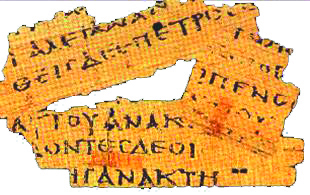
The John Rylands fragment of the Gospel of John is dated about A.D. 120, within about 20 years of living eyewitnesses of Jesus. Recently, the Magdalen manuscript (a fragment of Matthew) was dated by Dr. Carston Thiede to A.D. 55-60, within 25 years of Jesus Himself!
Conclusion: The Gospel records were written within the eyewitness generation of Jesus. The theory that they are legends is without merit.
2. How many manuscripts are there from authorship to the printing press?
The number of hand-copied manuscripts of other ancient literature ranges from 1–1,757. But archaeologists have found over 24,000 New Testament manuscripts from many sources and languages. And they are from every century from the 1st to the 15th.
Conclusion: The Gospel records we have today are not substantially changed from what eyewitnesses wrote.
The biblical Gospels are the genuine articles—the most reliable writings of antiquity!
Jesus: The Focus and Fulfillment of Prophecy
There are at least 456 Old Testament prophetic references that pertain to a future person, that all were fulfilled in the life of Jesus. Many of these had to do with Jesus’ trial, death, and resurrection:
- He would be betrayed for 30 pieces of silver (Predicted in Zechariah 11:12-13; Fulfilled in Matthew 26:14-16; 27:3-10)
- His hands and feet would be pierced—written before crucifixion was ever used (Predicted in Psalm 22:16; Fulfilled in John 20:25)
- He would be crucified with criminals (Predicted in Isaiah 53:12; Fulfilled in Luke 22:37)
- He would be resurrected from the dead (Predicted in Psalm 16:10; Fulfilled in Acts 2:24-32)
As a result of these details in His life, many eyewitness Jews became convinced that Jesus was the prophesied Messiah and the Son of God.
There are those today who object to fulfilled prophecy by saying that they were written at or after the time of Jesus, and therefore, fulfill themselves. Not so! Old Testament writings found in the Dead Sea Scrolls date to about 150 years before Jesus, and also include the prophecies.
The Physical Evidence
The historical records concerning Jesus were accurately transmitted over the centuries, but how do we know whether they represent the truth? For this, we turn to the external evidence of archaeology and historical research.
Caiaphas and Pontius Pilate
“Those who had seized Jesus led Him away to Caiaphas…” (Matthew 26:57) “Pilate then took Jesus…” (John 19:1)
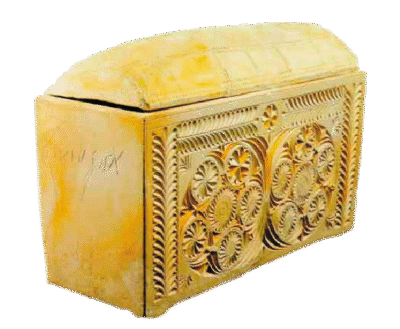
- Caiaphas is named in the Gospels as the Jewish high priest at Jesus’ trial. In 1990, a first-century burial cave was discovered, containing a sculptured bone box with “Joseph Caiaphas” inscribed on the side.
- Jewish and Roman historians confirm that Pontius Pilate was governor of Judea at the time of Christ’s crucifixion. A cornerstone was uncovered in ancient Caesarea Maritima, with the inscription: “Pontius Pilate, the Prefect of Judea, has dedicated to the people of Caesarea a temple in honor of Tiberius.”
Roman Crucifixion of Jesus
“Then they brought Him to the place Golgotha…And they crucified Him…” (Mark 15:22, 24)
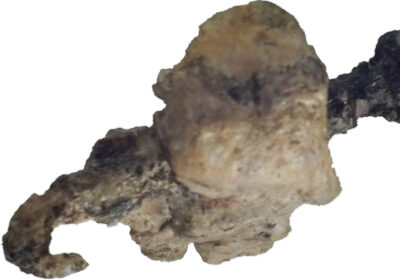
- A crucifixion victim was discovered in 1968 near Jerusalem, with a 6-inch nail through his feet. His crucifixion was dated to A.D. 42. This confirms the Gospels—there were nails used for crucifixion at the time of Jesus!
Resurrection of Jesus
“He is not here, for He has risen, just as He said…” (Matthew 28:6)
The Empty Tomb
- There was a 16-member Roman guard at the tomb, and a 1½-ton stone with a Roman seal covering the entrance. There was no defensible explanation for the missing Jesus except His resurrection.
“[I]f all the evidence is weighed carefully and fairly, …the tomb …in which Jesus was buried was actually empty on the morning of the first Easter” (Dr. Paul Maier, historian at Western Michigan University).
500 Eyewitnesses and Transformed Lives
- The Gospels record 10 distinct post-resurrection physical appearances of Jesus, to as many as 500 people at once.
- Most of Jesus’ disciples abandoned Him at the end. After seeing Him alive again, they were transformed from scared, hiding men into bold proclaimers of His resurrection, willing to die for their conviction. As Gary Habermas, apologist and philosopher, has said, “…liars do not make martyrs.”
This and other evidence fully support the biblical and historical records. There is now no objective reason to doubt Jesus’ life, death, and resurrection some 2,000 years ago. Nor do we dare ignore their implications.
A Personal Discovery
Many of us remember looking for Easter eggs as children. These colored treasures were hidden, so we had to look carefully. Our parents had favorite hiding places, such as behind a tree trunk, or up in the branches.
Looking for the truth about Easter also includes something that is hidden and a tree.

Like colored eggs, we can look good on the outside—what we let people see. But that facade often hides selfishness, envy, and impure thoughts within our hearts, which the Bible calls sin—“for all have sinned and fall short of the glory of God” (Romans 3:23). This sin has separated us from God (Isaiah 59:2, Romans 6:23), and the abundant, peace-filled life He intends for us (John 10:10).
Of course, far more important than seeking to find Easter eggs, we are to seek God. Graciously, He promises in the Bible that if we seek Him with all our heart, we will surely find Him (Jeremiah 29:13). The answer to our sin is not found at the base of a tree in our yards, however, but at an olive tree shaped into a cross, upon which Jesus died for our sins. Kneeling there, the sin hidden in our lives is revealed. Again God promises, “If we confess our sins, He is faithful and righteous to forgive us our sins and to cleanse us from all unrighteousness” (1 John 1:9).
Yet His death on the cross was not the end! The angel at the empty tomb said, “He is not here, for He has risen” (Matthew 28:6). Because He lives, we can know the hope of life eternal. Death doesn’t have to win anymore! The Bible says that “if you confess with your mouth Jesus as Lord, and believe in your heart that God raised Him from the dead, you will be saved” (Romans 10:9).
Bunnies, eggs, and bonnets are fun for a day. But there is only One who can give us abundant life now and forever. And this One, Jesus, gave us a wonderful promise: “For everyone who asks receives, and he who seeks finds, and to him who knocks it will be opened” (Matthew 7:8).
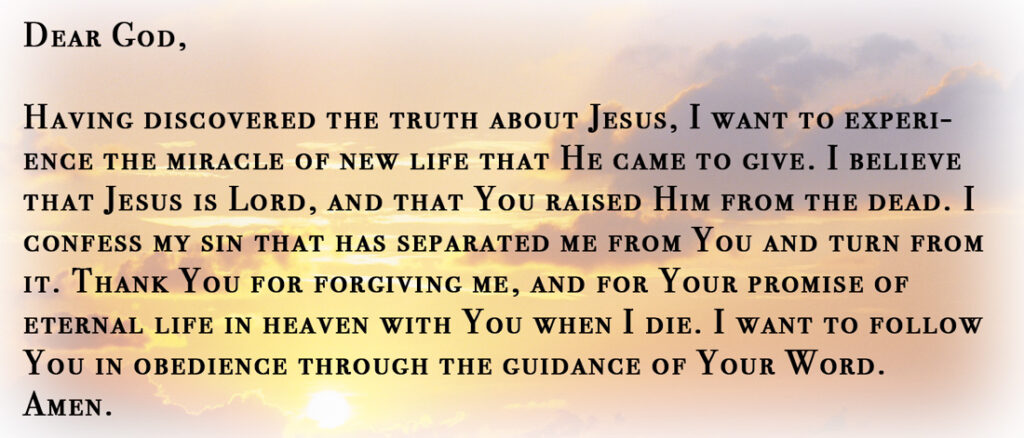
Let Jesus—the Truth of Easter—open your heart and make you new and beautiful forever inside. Do it now with this simple prayer:
We hope you enjoyed this FaithSearch resource and that it helped you to “look for the truth about Easter.” We would love to hear from you if this content was helpful or if you have any further questions. Don’t hesitate to contact us here.
Taking the Next Step
If you have made a faith commitment to Jesus for the first time in your life, or if the Bible Learning Center has helped you to renew your faith in Christ, this is good! We encourage you to consider two matters of great importance to your future spiritual confidence and fulfillment in life:
First, the Bible says very clearly, “God has given us eternal life, and this life is in his Son. He who has the Son has life; he who does not have the Son of God does not have life” (1 John 5:11,12). You have God’s promise that your eternal life began the very instant you received His free gift by placing your faith and trust in Jesus. Turn to this promise often for assurance.
Second, we also encourage you to grow in your relationship with God by getting to know Him more each day. The difference between a “so-so” existence and the abundant life Jesus promised is found in building your relationship with God through the study of His Word, the Bible.
“And now just as you trusted Christ to save you, trust Him, too, for each day’s problems… See that you go on growing in the Lord, and becoming strong and vigorous in the truth you were taught” (Colossians 2:6,7, TLB).

FaithSearch has prepared a book to help you do just that, called Growing Faith. It is available from our office, and we are offering this valuable resource FREE of charge to anyone who has made a faith commitment to Jesus Christ for the first time as a result of the Bible Learning Center. Simply Contact Us.
You can also take the self-paced course, FREE right here in the Bible Learning Center. We look forward to hearing from you.
If you would like more information, we encourage you to contact us as well. We offer a number of publications and events that may help you find answers to life’s most important questions.

For example, the book Surprised by Faith, by former skeptic and Ph.D. biologist Dr. Donald A. Bierle, tells the story of his personal, life-changing discoveries about God, the Bible and personal fulfillment. The information in the book is also offered as FaithSearch Discovery, a live event, video series or self-paced FREE course.